













Men’s Work Pants for Tradies: What to Look For
A torn knee, sagging waistband or pocket that drops your mobile every time you climb a ladder will slow down a day quickly. The right men's work pants for tradies are not just a uniform requirement. They need to handle kneeling, lifting, climbing, mud, sweat and long drives between jobs without getting in the way.
For Australian tradies, the best pair depends on the work being done, the conditions on site and how much movement the job demands. A chippy working at floor level needs something different from a warehouse worker on a forklift, while road crews and rail workers may need compliant hi vis gear as part of their site requirements. Start with the job, then choose the fabric, fit and features that make the working day easier.
Start With Your Worksite Conditions
Before looking at pocket layouts or colours, consider where the pants will be worn. Indoor maintenance work, regional construction sites, mining operations and agricultural jobs each place different demands on workwear.
For hot conditions, lightweight cotton drill or breathable stretch fabrics can help you stay more comfortable through a long shift. They are a practical choice for carpenters, sparkies, landscapers and general labourers working through summer. The trade-off is that lighter fabric may not stand up to repeated abrasion as well as a heavier drill pant, particularly if you spend most of the day on your knees or around rough concrete.
Heavier cotton drill and canvas-style work pants suit demanding jobs where durability is the priority. They offer more protection from knocks, dust and surface wear, making them a sound option for construction, fabrication, farming and industrial work. In colder weather, a heavier fabric also gives you more warmth, though it can feel less forgiving during high-movement work.
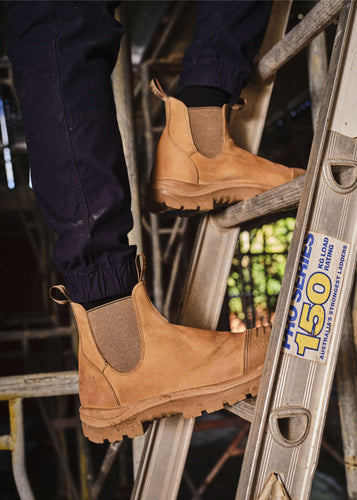
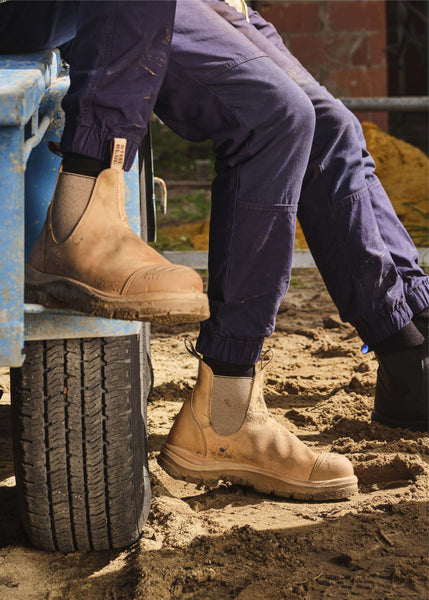
Wet weather changes the brief again. Waterproof overpants are useful when rain is unavoidable, especially for civil crews, outdoor maintenance teams and agricultural workers. They are generally worn over regular work pants, allowing you to remove the outer layer when the weather clears. Check that the cut is roomy enough for layering and that the leg openings work with your safety boots.
Choose a Fit That Moves With You
Work pants should sit securely at the waist without digging in when you bend, squat or sit in the ute. A good fit is about more than the number on the tag. Rise, thigh room, leg shape and stretch panels all affect how the pants perform on site.
Regular-fit work pants remain a reliable all-round option. They provide enough room through the seat and thigh for physical work without excess fabric catching on equipment. For tradies who prefer a tidier profile, tapered or modern-fit styles can work well, provided there is still enough movement for climbing, kneeling and stepping over materials.
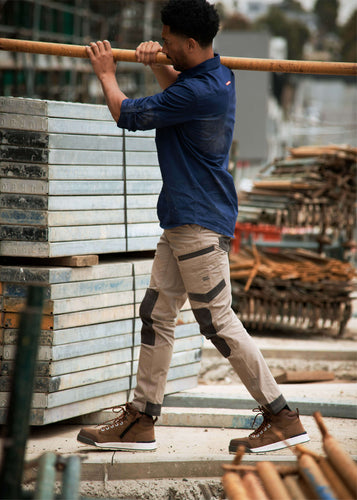
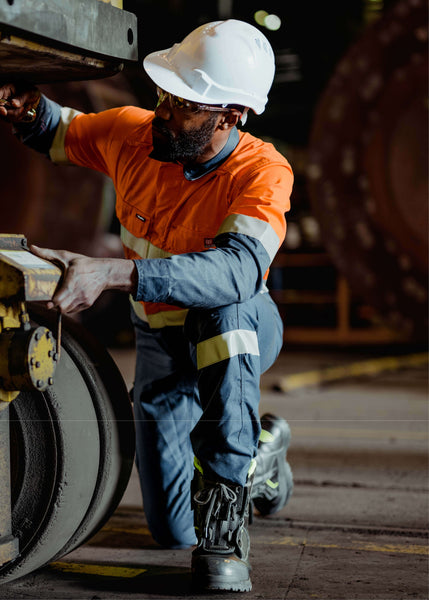
Stretch work pants are worth considering if your role involves constant movement. Mechanical stretch fabrics, elastane blends and strategically placed stretch panels can make a noticeable difference when working in confined spaces, climbing scaffolding or fitting out interiors. Stretch does not automatically mean less durable, but it is worth checking where the stretch fabric is positioned. High-wear areas still need reinforcement.
A gusseted crotch is another useful feature for active trades. This extra panel reduces strain through the inside leg and can improve comfort when squatting or taking wide steps. Articulated knees serve a similar purpose, following the natural bend of the leg instead of pulling tight every time you kneel down.
Get the Length Right
Pant length matters more than many workers expect. Too long, and the hem drags through mud, catches under boots or wears out quickly. Too short, and it can ride up while kneeling or leave an awkward gap above the boot.
Look for short, regular and stout sizing where available, especially when ordering for a crew. A proper length also helps knee pad pockets sit in the right place. If they are too high or too low, the protection will not stay over your knees when you need it.
Fabric Strength Matters Where It Counts
Most quality men's work pants for tradies use cotton drill, ripstop, canvas or blended technical fabrics. Each has a place.
Cotton drill is a familiar workwear choice because it is breathable, practical and comfortable to wear all day. Ripstop fabric includes a reinforcing weave designed to limit a small tear from spreading, making it useful for jobs around sharp edges, timber and rough surfaces. Canvas-style fabrics are generally heavier and well suited to high-abrasion work.
Reinforced panels at the knees, seat and pockets are worth paying attention to. These are the areas most likely to wear through first. Some styles use durable contrast fabric or double layers over the knees, giving the pants a longer working life for tilers, floor layers, plumbers and anyone regularly working at ground level.
The strongest fabric is not always the best choice. If you work in heat and spend most of your day standing or driving, a heavy canvas pant can be unnecessary. On the other hand, lightweight pants may be false economy for demolition, concreting or landscaping if they wear out after a season. Match the construction to the job rather than buying on fabric weight alone.
Pockets Should Earn Their Place
Cargo pockets are useful, but more is not always better. Overloaded pockets can pull pants out of shape, interfere with movement and make it uncomfortable to sit or drive. The best setup gives you access to the items you actually use without turning each leg into a tool bag.
For many trades, deep front pockets, secure back pockets and a dedicated mobile pocket covers the basics. A ruler pocket remains useful for carpenters and builders, while utility loops and reinforced multi-tool pockets can suit workers who need gear close at hand. Some modern work pants include zippered or concealed pockets for valuables, which is handy when moving between site, vehicle and supplier runs.
If you wear a tool belt most of the day, a simpler pant may be the better option. Too many external pockets can sit awkwardly under the belt or create pressure points when loaded up. Try to picture your normal setup before choosing a style.
Knee Pad Pockets Are Worth It for Ground Work
For tradies who kneel regularly, built-in knee pad pockets are one of the most practical features available. They allow compatible pads to sit inside the pant rather than being strapped around the outside of your leg. That means less slipping, less bunching behind the knee and less time spent adjusting gear.
Knee pads are particularly useful for flooring, plumbing, electrical fit-outs, cabinet installation, landscaping and maintenance work. They do add bulk, and not every job needs them. But if sore knees are becoming part of the standard knock-off routine, pants with knee pad pockets are a sensible upgrade.
Check whether the pockets load from the top or bottom and whether the work pants suit the particular pads you plan to use. A well-designed pocket keeps the pad positioned over the knee when moving from standing to kneeling.
Hi Vis Work Pants Need More Than Bright Colour
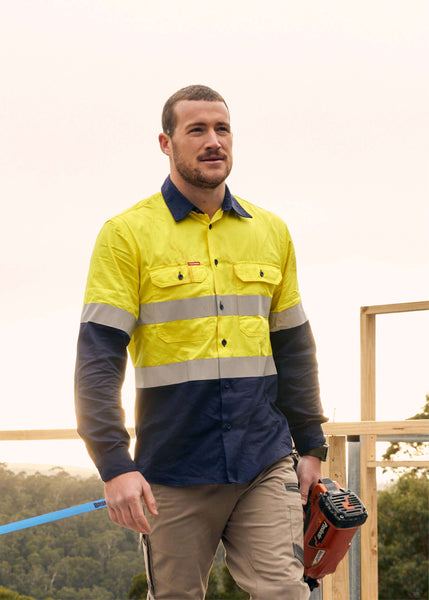
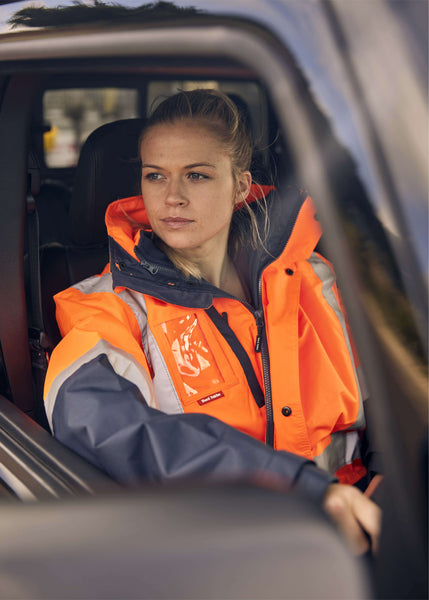
Hi vis pants are often required for roadwork, rail, logistics, civil construction and sites where mobile plant is operating. The correct garment depends on the site rules, the work location and whether you need day-use, night-use or day-and-night visibility.
Do not assume all hi vis workwear meets every requirement. Fluorescent fabric assists daytime visibility, while reflective tape is needed for low-light and night work. Your employer, principal contractor or site supervisor should confirm the required standard and garment configuration before you buy.
Hi vis pants also need to remain functional. Look for durable fabric, practical pockets and a fit that works with your normal belt, boots and PPE. Dirty or badly faded hi vis clothing can reduce visibility, so rotation and proper washing are part of keeping workwear fit for purpose.
Make Them Last Longer
Good work pants take a beating, but basic care helps protect your investment. Empty pockets before washing, close zips and fasteners, and wash heavily soiled gear separately where possible. Follow the care label, particularly for hi vis garments, flame-resistant workwear or pants with reflective tape.
Avoid leaving wet or muddy pants bundled in the back of the ute for days. Ground-in dirt wears at fibres, while damp gear can develop odour quickly. Inspect high-wear points every few weeks, especially knee panels, hems, belt loops and pocket edges. Small repairs done early can keep a serviceable pair in rotation.
For teams, standardising a small range of proven styles can simplify uniform ordering and replacement. LODWorkwear stocks workwear from trusted names including FXD, Hard Yakka, KingGee and Bisley, helping individual tradies and businesses select pants suited to their site requirements.
The best work pants are the pair you stop thinking about once the day gets moving. Choose a fit that lets you work freely, fabric that suits the conditions, and features that solve real problems on the job. That is workwear doing its job properly.


