












Rail Compliant Workwear Requirements Explained
Rail compliant workwear requirements are not satisfied by throwing on any hi vis shirt and steel cap boots. Rail corridors bring moving plant, live electrical assets, uneven ballast, changing weather and strict access controls into the same shift. Your clothing and PPE need to meet the requirements of the rail network, principal contractor and task - while remaining practical enough to work in.
For rail crews, maintenance teams, contractors and supervisors, the first rule is simple: confirm the site requirement before purchasing. A garment marked as compliant with an Australian Standard may be suitable for one job, but not approved for a particular rail corridor, possession or electrical task. Workwear is one part of site compliance, alongside inductions, competencies, permits and the right PPE.
Rail Compliant Workwear Requirements Start With the Site
There is no single Australia-wide rail uniform that applies to every worker. Requirements can differ between network operators, project sites, metropolitan rail environments, freight corridors and private rail facilities. A client may nominate approved garment colours, reflective tape layouts, logos, fire-resistant protection, footwear specifications or PPE brands.
Ask the site supervisor, project manager or safety representative for the current PPE matrix before placing an order. Check whether the requirement applies to all personnel or only workers entering the rail corridor. Also clarify whether there are separate rules for night work, track access, welding, signalling, overhead work or work around mobile plant.
This step avoids a common and costly issue: buying compliant-looking hi vis apparel that is rejected at the gate because the colour, tape configuration or standard does not match the network rule. It also helps uniform managers order the correct gear across permanent staff, casual crews and subcontractors.
Hi Vis Clothing for Rail Work
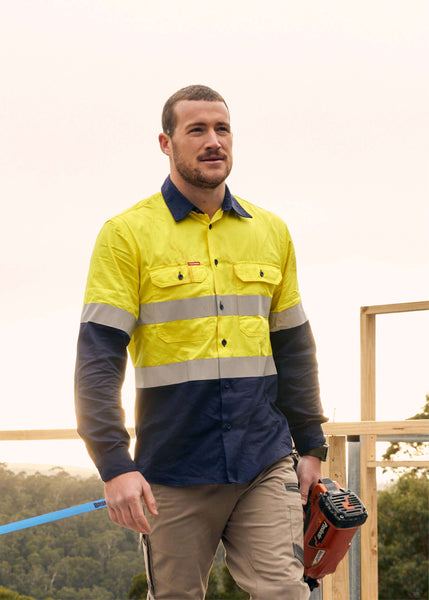
Hi vis is usually the most visible part of rail workwear compliance, but it is more specific than simply wearing fluorescent fabric. Rail sites commonly require high-visibility garments designed for day, night or day-and-night use. The applicable Australian Standard and garment classification must suit the work conditions and the site instruction.
Day use garments rely on fluorescent background material to improve visibility in daylight. Night-use garments use retroreflective tape to return light from headlights, work lights and other sources. Day-and-night garments combine both. A crew working a possession that begins in daylight and runs into the early morning may need a day-and-night option, even if the first few hours are bright.
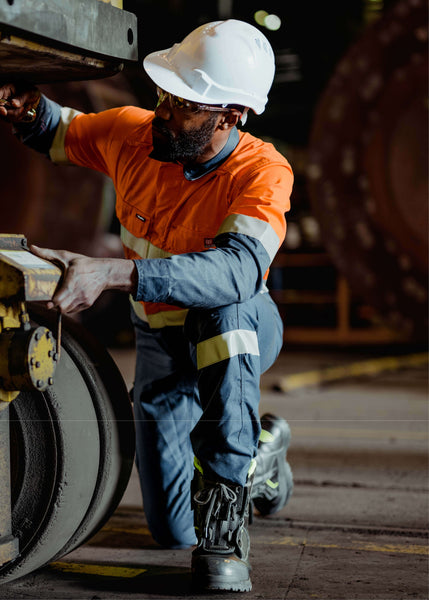
Rail operators may also specify orange, yellow or another approved colour. Do not assume that a favourite yellow hi vis polo can be used everywhere. Orange may be required to help distinguish rail personnel from other workers, while a particular project may set its own colour rules for different roles.
Fit and condition matter as much as the label. A loose vest can catch on equipment, while a shirt covered by a non-hi-vis jacket loses its purpose. Keep reflective tape clean and visible. Faded fabric, damaged tape, heavy grease marks and excessive logo coverage can reduce visibility and may make a garment unsuitable for site use.
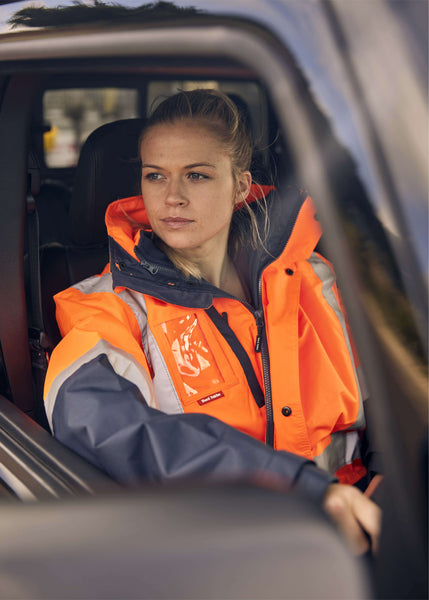
For outdoor crews, practical layering is often the best approach. Start with an approved long-sleeve hi vis shirt for sun protection, then add compliant hi vis outerwear when conditions change. A waterproof hi vis rain jacket must still provide the visibility specification required by the site. A standard dark rain shell worn over compliant apparel is generally not an acceptable substitute.
Work Pants, Shirts and Protection From the Elements
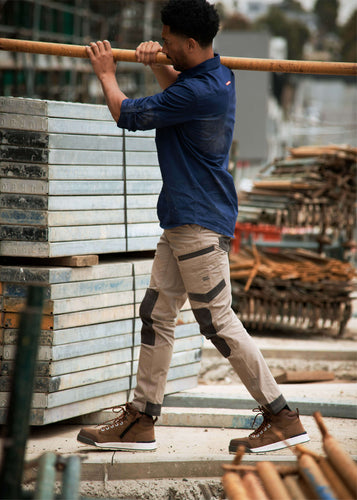
Rail work can mean climbing in and out of vehicles, walking ballast, kneeling beside track equipment and working through cold starts or summer heat. Durable work pants with reinforced stress points, useful pockets and room to move can make a genuine difference over a long shift. However, pockets and loose features should not create snag hazards around plant or machinery.
Long-sleeve shirts and long pants are commonly required where crews need protection from sun, abrasion, vegetation, dirt and minor workplace hazards. For some tasks, a site may require flame-resistant or arc-rated clothing. This is not a general upgrade for every rail worker. It is task-specific protection that must be selected according to the electrical or thermal hazard assessment.
If flame-resistant garments are required, ensure all layers are suitable. Wearing a non-compliant synthetic layer under or over protective clothing can affect its performance. Follow the garment care instructions as well. Incorrect laundering, bleach and unsuitable repairs can compromise fabric properties or reflective trim.
Cold-weather gear deserves the same planning. Rail work does not stop because the temperature drops, but workers still need movement, warmth and visibility. Approved hi vis jumpers, jackets and rainwear should be sized to layer over base clothing without restricting reach, climbing or manual work.
Footwear: More Than a Steel Cap
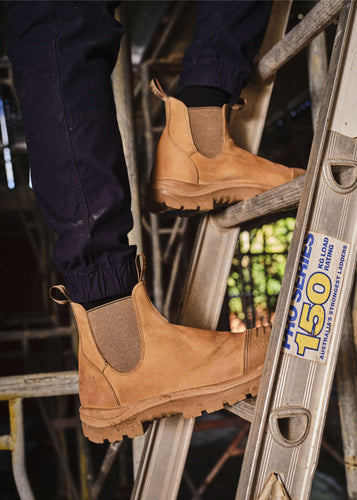
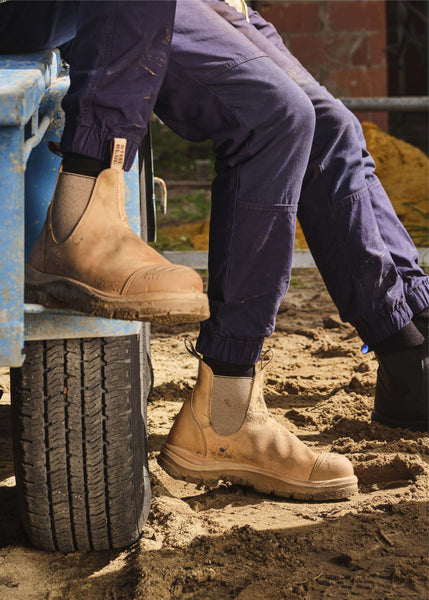
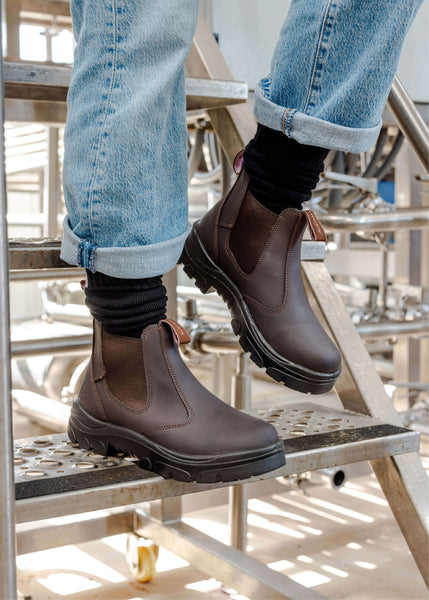
Safety boots for rail work need to match the hazards underfoot and the rules of the worksite. Steel cap boots are common, but toe protection alone does not make a boot suitable for rail work. Check the required safety footwear standard, sole construction, slip resistance and any task-specific requirements before ordering.
Ballast, wet sleepers, mud, oil, cable pits and uneven ground place real demands on grip and ankle support. A quality work boot with a durable outsole and secure fit is often a better choice than a light, low-cut boot for workers regularly on rough trackside ground. On the other hand, workers spending most of the shift inside a depot or vehicle may have different comfort and mobility needs.
Electrical risk changes the decision again. Some rail tasks may require specific electrical hazard controls, while others may prohibit footwear features that are unsuitable near sensitive equipment. Follow the documented site direction rather than relying on a general claim such as anti-static or airport-friendly. Those features serve particular purposes and are not interchangeable.
Break in new boots before a major shift where possible. Blisters, poor fit and loose laces are not minor inconveniences on ballast. Select the correct width, use work socks that manage moisture and replace footwear once tread, uppers or protective components are worn beyond serviceable condition.
PPE Must Match the Job, Not Just the Uniform
A rail-ready uniform is only part of the kit. The task risk assessment may call for a hard hat, safety glasses, hearing protection, gloves, respiratory protection, face protection or fall-arrest equipment. Each item needs to work with the others.
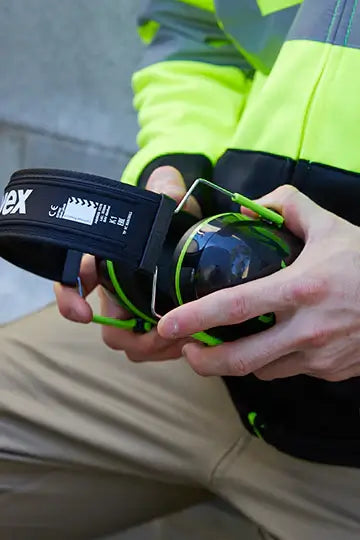
For example, earmuffs must seal properly around the ear, safety eyewear must sit securely with the chosen hard hat, and gloves need enough grip and dexterity for the task. A general-purpose glove may be fine for handling clean materials but unsuitable for sharp edges, chemicals, hot components or electrical work. Use the protection specified for the hazard.
Hard hats should be replaced when damaged, affected by impact or outside the manufacturer’s service life. Do not drill, paint or modify them unless the manufacturer expressly permits it. The same care applies to safety eyewear: scratched lenses and loose arms can reduce protection and make workers less likely to wear them consistently.
Branded Rail Uniforms Need Approval First
Embroidery and printing can help identify crews, present a professional team and simplify issue control. On hi vis garments, though, branding must never cover reflective tape or reduce the required fluorescent background area. Placement, size and thread colour should be checked against the client’s uniform specification before production.
For larger crews, build an approved uniform range rather than relying on one garment. A practical issue can include short- and long-sleeve shirts, work pants, approved outerwear and replacement PPE. This gives workers options for weather and task changes without compromising the standard set for the site.
LODWorkwear can help businesses source workwear, safety boots and PPE across recognised brands, but final rail acceptance rests with the relevant network, project and employer requirements. Keep a record of approved product codes, garment specifications and logo artwork so reorders stay consistent.
A Practical Pre-Shift Check
Before heading to site, check that your hi vis is clean, correctly fitted and visible from all sides. Confirm your boots are serviceable, your PPE is in date and undamaged, and any task-specific protection has been issued. If conditions or the job scope have changed, stop and confirm the required gear before starting.
The right rail workwear should help you be seen, protected and ready to move safely through the job. When there is any doubt, the site PPE matrix is the standard to follow - not what worked on the last project.


